Accessible PDF reading, built in
Make Your PDFs Accessible to Everyone
FlowPaper turns a PDF into real, structured HTML5. WCAG 2.1 compatibility now covers every viewer template, whether you're publishing a catalog, brochure or other flipbook.
Readers can zoom in, listen to a page read aloud, or get around with a screen reader. None of it takes much extra setup on your end.
Try it with your PDF See how it worksSharp text at every zoom level
Pages convert to crisp HTML5 rather than a flattened image, so text holds up whether a reader zooms in on screen or prints the page.
Real screen reader support
JAWS, NVDA and other popular screen readers can read through your publication, and FlowPaper works out the reading order for you.
Read-aloud with visible progress
A built-in read-aloud button plays each page back and highlights the text as it goes. It works even if no screen reader is installed.
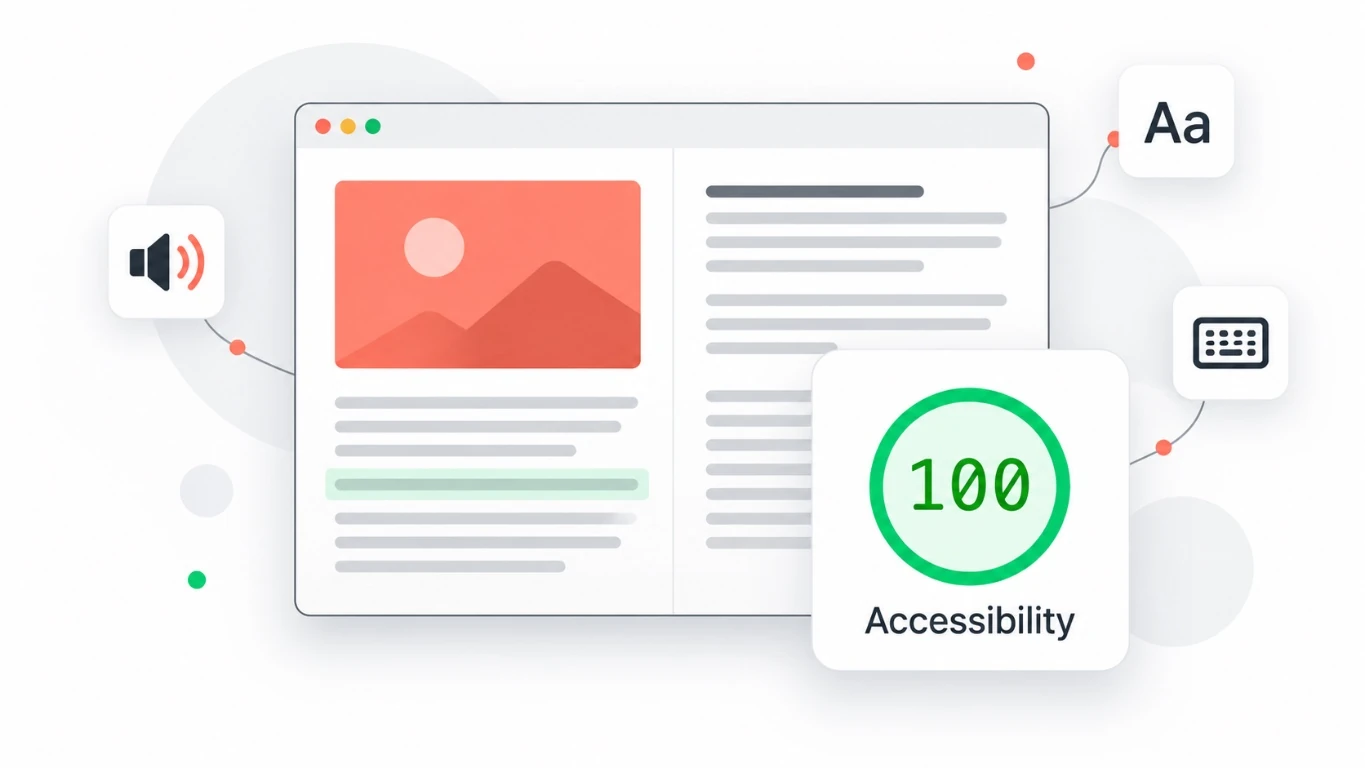
WCAG 2.1, now across every template
FlowPaper 4.1.5 brought WCAG 2.1 compatibility to every viewer template, not just one. Pick whichever template fits your publication and readers still get the same accessible experience.
We've cross-tested FlowPaper with third-party accessibility tools, including Google PageSpeed Insights and A11yPulse.
That said, a compatible template is only part of the picture. The contrast and fonts in your original PDF still matter, and there's no way for FlowPaper to fix those for you. It's worth running your document through an accessibility checker before you publish.
Read the full WCAG 2.1 announcement →
How to make a PDF accessible
- Import your PDF. Open it in FlowPaper's Desktop Publisher and choose a template.
- Turn on accessibility and SEO. In Settings, open the Accessibility and SEO section and enable Improved Accessibility and Improved SEO, then apply your settings.
- Publish your document. Publish it the same way you normally would, once those settings are applied.
- Test the result. View the publication with a screen reader such as JAWS or NVDA, or use FlowPaper's built-in read-aloud button, to confirm pages read out in the right order.
Built for readers who need it
As sharp as it gets
Every page becomes real HTML5, not a flattened image. Zoom in and there's no re-rendering wait, and the page still looks sharp if someone prints it.
True screen reader support
JAWS, NVDA and similar tools can work through your publication much like they'd work through any other web page.
Read out loud with progress
No screen reader on hand? FlowPaper's own read-aloud feature plays back the page and shows exactly where it's up to.
Better search visibility too
The structured HTML5 that a screen reader relies on is also easier for Google to crawl, which can help your pages rank.

Automatic reading order, no manual tagging
There's no need to tag the original PDF by hand. FlowPaper figures out a sensible reading order on its own, and screen readers move through the content in that sequence.
While a screen reader is reading a publication aloud, the current line is highlighted on screen, so sighted assistants and low-vision readers can follow along visually too.
Questions about accessible PDFs
Does this make my PDF automatically WCAG compliant?
Not automatically, no. A compatible template helps, but your source PDF's fonts, contrast and structure still play a big part, and those are outside FlowPaper's control. If you need to guarantee compliance, run the finished document through an accessibility checker first.
Which screen readers are supported?
JAWS and NVDA are both supported. If a reader doesn't have either installed, FlowPaper's own read-aloud button fills the gap.
Do I need to manually tag my PDF for reading order?
No. FlowPaper works out the reading order for you, so there's nothing to tag by hand.
Is WCAG 2.1 support available on every template?
Yes, as of version 4.1.5. Before that it varied by template, but now you can pick whichever one suits your publication.
Does accessibility affect my SEO?
Usually for the better. The same structured HTML5 that a screen reader relies on is also easier for Google to crawl. See search ranking features for more on that.
Do I need coding skills to turn this on?
Not at all. Flip on Improved Accessibility and Improved SEO in the Desktop Publisher's settings, apply, and publish as you normally would. The full accessibility and SEO guide walks through it step by step.
Give every reader a better way to read your PDF
Make your next catalog, brochure or report accessible from the start.
Try FlowPaper with a PDF